
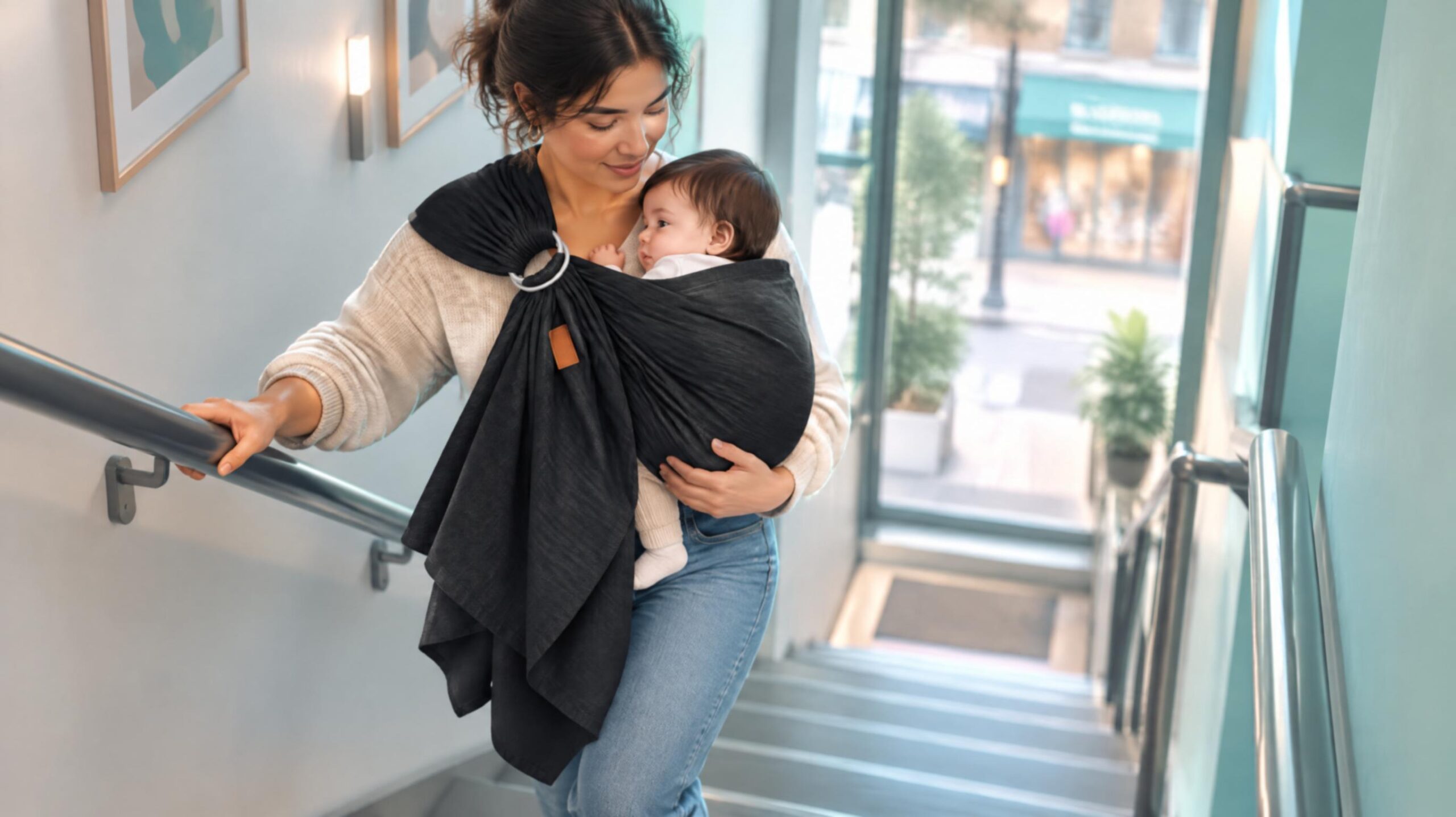
A 15-minute pharmacy stop can become a much larger operation when your apartment has no elevator. Before you reach the street, there is a stairwell, a stroller, a child, and whatever you need to bring home.
For short neighborhood trips, the question is not whether a stroller has value. It is whether its setup, storage, and stair logistics match the errand in front of you. A baby carrier for quick errands can reduce that friction by keeping your child close while leaving your hands available for the parts of walk-up living that require balance and attention.
The walk-up reality: why micro-errands feel like marathons
A micro-errand is a short, local outing: picking up a prescription, collecting a few groceries, or walking to a nearby shop. The destination may be close, but an elevator-free building adds steps before the outing even starts.
A stroller can be useful once you are outside. Inside a narrow stairwell, however, its frame becomes another object to fold, carry, position, and retrieve. That extra gear can make a simple departure feel disproportionately demanding, especially when you need to leave and return within a short window.
This is where a more deliberate errand setup helps. Rather than treating every local trip as a full stroller outing, match the gear to the duration, route, and amount you need to carry. For a brief neighborhood stop, a single-piece carrier may be the more practical starting point.
The hidden safety risks of strollers on stairs
Stairs deserve a clear rule: balance comes before gear. Carrying a child while also managing a folded stroller can limit your ability to use the handrail and respond if you lose footing.
Nationwide Children’s Hospital stair-safety guidance advises caregivers carrying a child to avoid carrying other items and to keep one hand on the handrail. That guidance is difficult to follow when a stroller is part of the same trip.
A hands-free carrier changes the logistics, but it is not a reason to rush. Settle and secure your child according to the carrier’s instructions before approaching the stairs, keep one hand available for the rail, and avoid using the stairs as a place to adjust fabric or manage extra items.
Audit your errand logistics before you leave
For outings under roughly 45 minutes, it helps to decide whether a stroller will genuinely earn its place. Consider the full sequence, not just the walk outside:
- How many flights of stairs are between your door and the street?
- Will you need to navigate narrow aisles, doorways, or a crowded sidewalk?
- Are you buying only a few small items?
- Could your child want to walk for part of the outing and be carried for the rest?
If the trip is short and the answer points toward minimal gear, a compact baby carrier can remove several handoffs. You put it on at home, walk down with a hand free, complete the errand, and return without dealing with a chassis at either end of the journey.
This is not about abandoning a stroller for every outing. It is about choosing a stroller alternative for errands where the equipment creates more friction than it removes.
Why a compact baby carrier works for neighborhood errands
The right compact carrier supports a direct path from apartment door to storefront. There is no frame to steer through a narrow entrance, no bulky item to park beside a shop shelf, and no separate piece of equipment to carry down the stairs.
Fabric carriers also take up less room when they are not being worn. That matters when storage is limited or when you want a carrier that can sit in a small bag between short outings.
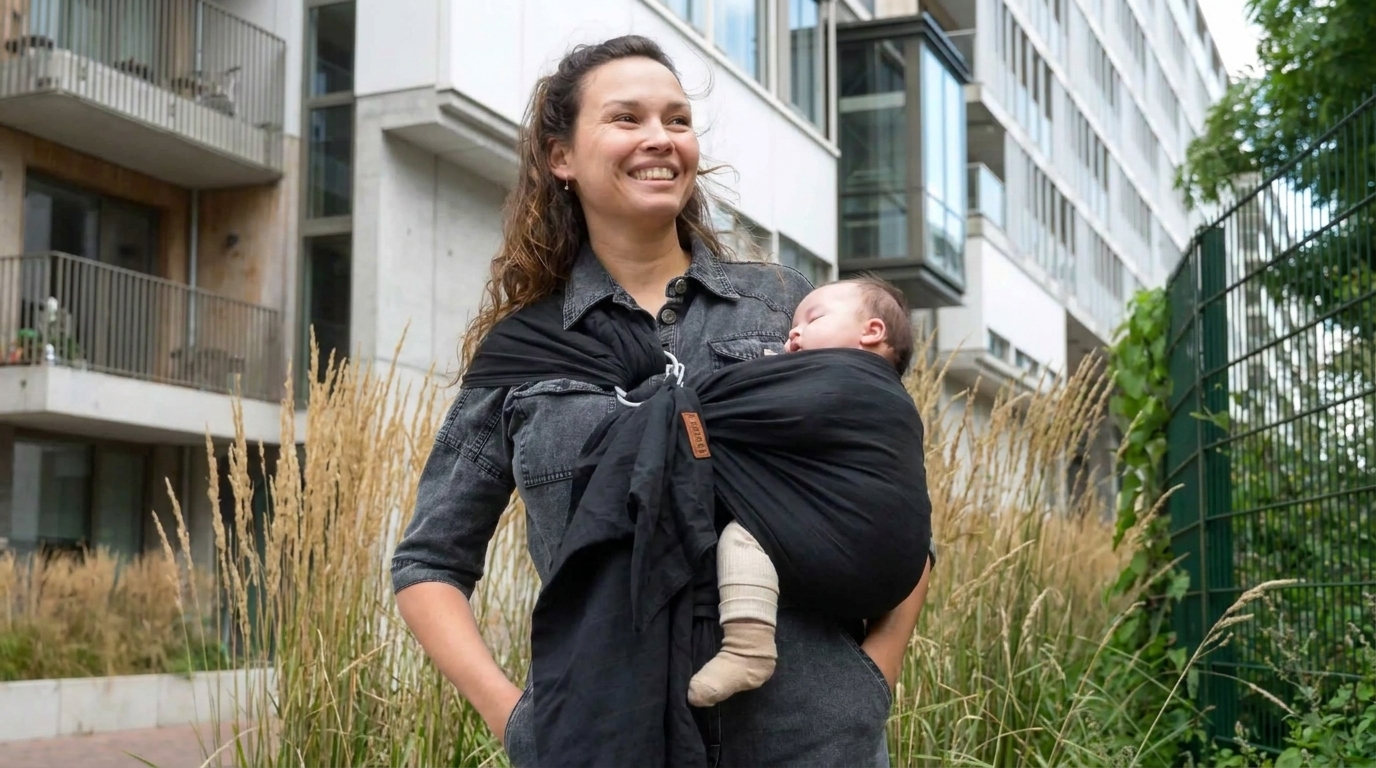
The benefit is practical, not complicated: fewer objects competing for your attention during a short trip. You can focus on the stairs, your route, and your child instead of managing an additional piece of gear.
Evaluating stroller alternatives: the speed of a ring sling
A ring sling is particularly suited to the quick-change rhythm of local errands. Rather than relying on multiple buckles or a long wrapping process, fabric passes through two rings for continuous, stepless adjustment. That lets you fine-tune the fit without moving through preset sizes.
This setup can be useful when a toddler alternates between walking and being carried. You can adjust the sling for a carry, then fold it away when it is no longer needed. For a closer comparison of everyday formats, read Ring Sling vs Baby Wrap: Which Carrier Is Easier for Everyday Use?.
Material also matters on active, short trips. Lightweight, breathable fabric can make a carrier easier to keep nearby instead of leaving it at home because it feels like too much equipment for a brief outing.
The Ringsling Raven Black is built around that low-friction approach. Its two aluminum rings allow stepless adjustment, while its 100% hydrophilic organic cotton fabric is lightweight and breathable. The sling folds into a compact form for a bag, stroller, or bicycle bag, and its quick hop-on, hop-off format suits intermittent toddler carrying. It is designed for children up to 18 kg.
If toddler carrying is part of your errand routine, Can You Use a Ring Sling for a Toddler? can help you evaluate that use case in more detail.
Reclaim your neighborhood mobility
Living in a walk-up does not require every short outing to begin with heavy gear and a complicated exit plan. For quick neighborhood errands, a compact carrier can make the route from your apartment to the street more manageable while preserving the handrail access that stairs demand.
Try a simpler setup for your next micro-errand. Prepare only what you need, secure your child before the stairs, and use a compact option such as the Ringsling Raven Black when a full stroller is not the right tool for the trip.

