
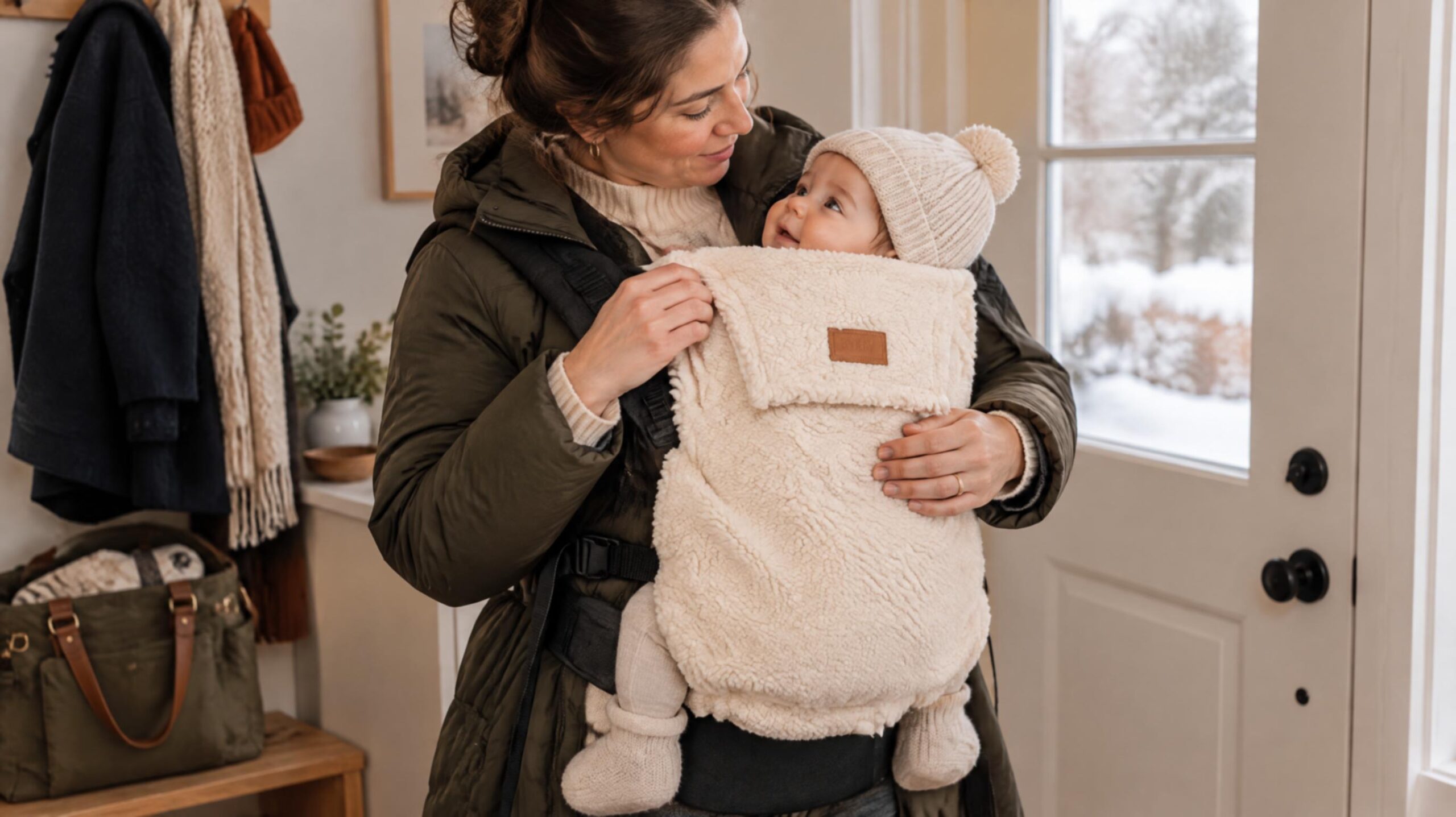
Winter outings with a baby can feel like a lot of preparation for a very short trip. There are booties to find, a hat to pull on, and the question of whether a thick coat will make the carrier harder to use. For a daycare drop-off, grocery run, or walk around the block, a simple routine can make getting out the door feel much more manageable.
The key idea is straightforward: dress your baby in comfortable indoor layers, then add warmth over the carrier. This approach helps you keep the carrier adjusted close to your baby while giving you an outer layer that can be opened, folded down, or removed when you head indoors.
Why bulky outerwear can complicate babywearing
A thick snowsuit or puffy coat adds compressible bulk between your baby and the carrier. Once that material compresses, the carrier may not stay as snug as it seemed when you first fastened it. CalmFamily’s guidance on carrying in cold weather explains that bulky winter clothing can make a carrier harder to tighten securely, creating slack that can affect safe positioning and airway visibility.
There is also the practical indoor-outdoor transition. A warm car, shop, or daycare lobby can quickly feel different from the pavement outside. Instead of fully undressing your baby after every short walk, it can be easier to adjust one outer insulating layer while leaving their comfortable base clothing in place.
This does not mean winter outings need to be complicated. It simply means planning warmth in layers that work with the carrier rather than filling the space inside it with thick outerwear.
The winter layering rule: keep insulation over the carrier
When deciding how to dress a baby in a carrier for winter, start with the clothes your baby would be comfortable wearing indoors. A thin, breathable base layer gives you a practical foundation for changing temperatures.
Then focus on the parts of your baby that are outside the carrier:
- A warm, well-fitting hat that does not slip over the face
- Booties, warm socks, or other foot coverage
- Mittens when little hands are exposed to the cold
Your body heat and the carrier already create a shared, sheltered space around your baby’s core. The main insulation can sit over the carrier, where it adds warmth without placing a bulky coat underneath the carrier’s panels and straps.
Think of it as a modular routine: light clothing close to your baby, warm coverage around the outside, and an easy way to adapt once you arrive. For a quick errand, that can be much simpler than wrestling a small child into a thick suit and then trying to readjust the carrier.
Use a carrier inlay for flexible winter warmth
An insulating carrier inlay is designed to turn an everyday or summer carrier into a warmer option for cold-weather babywearing. The Inlay Teddy Ecru adds a soft insulating layer over the carrier, helping you avoid putting your baby in a thick, restrictive winter jacket before carrying.
Its ecru teddy fabric is made from an 80% cotton and 20% polyester blend. It is designed for children from 0 to 4 years old, up to 23 kg, and can be used for front, hip, or back carrying. Because the inlay is separate from the carrier, you can fold it down or take it away when the temperature changes instead of changing your baby’s whole outfit.
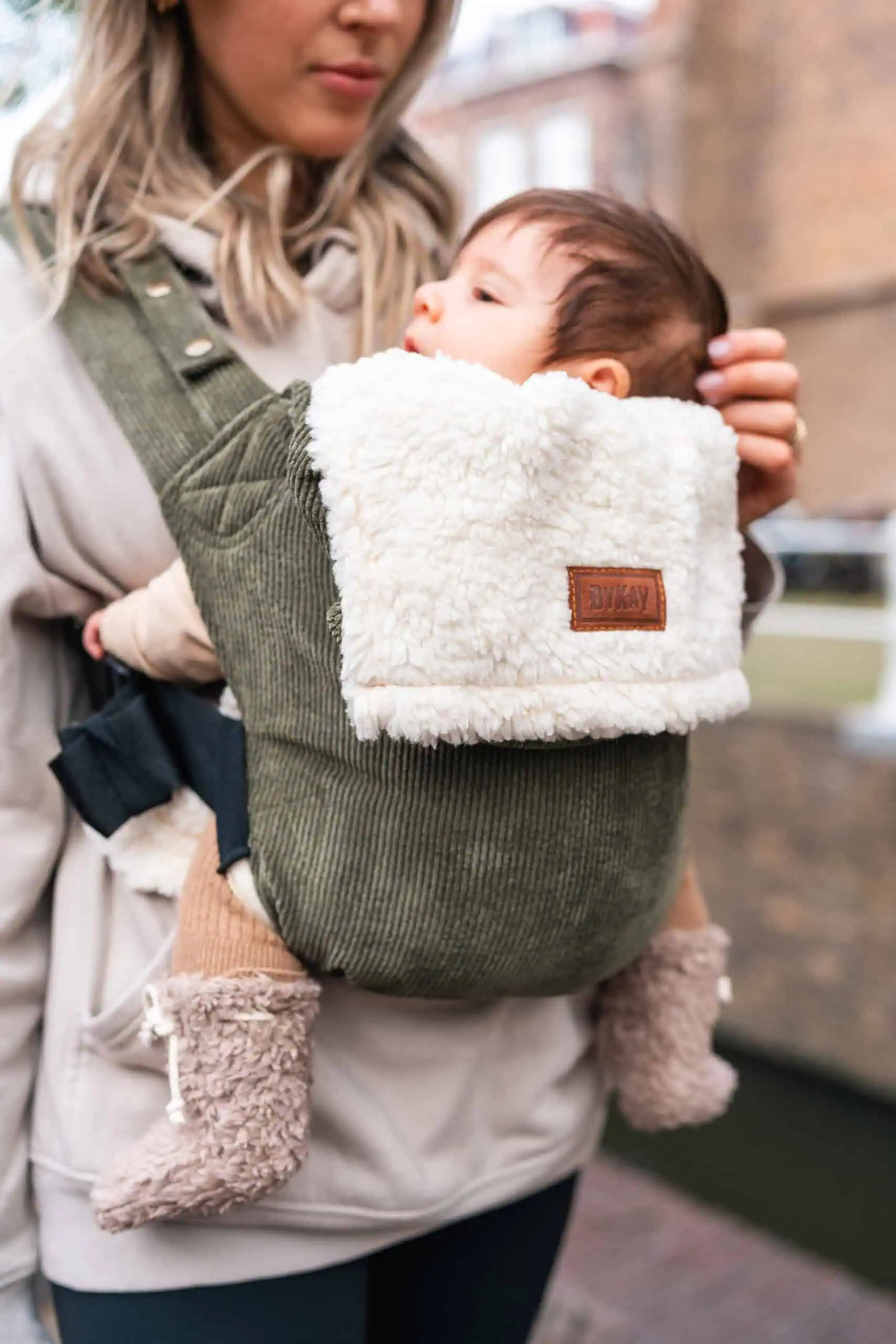
For parents who are babywearing in winter without a coat for the baby, this type of outer layer can keep the departure routine focused: carrier on, baby positioned, inlay added, then a quick safety check before you leave.
How to install your winter inlay
The Inlay Teddy Ecru is designed to work with a range of carrier styles, including structured carriers and wraps or slings. Choose the setup that fits the carrier you already use.
For carriers with unclippable shoulder straps
Thread each shoulder strap through the inlay’s integrated elastic bands before fastening the carrier. The elastic loops help hold the inlay in place over the carrier as you move. This can be useful when you want the outer layer to stay positioned through a walk, commute, or school run.
For wraps, slings, and non-clippable straps
If the straps do not unclip, the inlay can rest inside the carrier or be tucked between the fabric layers of a wrap or sling. It does not need to be clipped directly onto a sling. Place it so it provides warmth around your baby while keeping the face fully visible and uncovered.
If you use a ring sling, start with a secure base carry before adding any extra layer. Our guide to using a ring sling safely for newborns can help you review positioning and fabric adjustment. And if you are still choosing between carrier styles for daily life, see our comparison of ring slings and baby wraps for everyday use.
Make a quick safety check part of every outing
Before you head out, pause for a few seconds. A fast check is especially helpful when you are layering baby in a carrier for winter and moving between chilly streets and heated indoor spaces.
- Keep the face clear. Your baby’s nose and mouth should remain completely uncovered, and you should be able to see their airways.
- Check the carrier fit. Make sure your baby is held snugly and that the carrier has not loosened around bulky clothing or added layers.
- Check for warmth. Feel the back of your baby’s neck during the outing. Sweating or very warm skin can be a sign that it is time to reduce a layer.
- Adjust indoors. Fold down, loosen, or remove the inlay when you enter a warmer space if your baby needs less insulation.
The elastic attachment is convenient, but it is not mandatory. If tucking the inlay works better with your carrier, use the setup that keeps your baby comfortably positioned and their face unobstructed.
A calmer way to head out in cold weather
Learning how to keep your baby warm in a carrier in winter does not require a complicated system. Start with thin indoor layers, cover exposed hands, feet, and head, and add your insulation over the carrier. That gives you a practical way to adapt to the changing temperatures of everyday family life.
For a warm outer layer that works with structured carriers, wraps, and slings, explore the Inlay Teddy Ecru. It is a simple addition to an everyday carrier routine when cold-weather errands call for extra warmth without bulky baby outerwear.

