
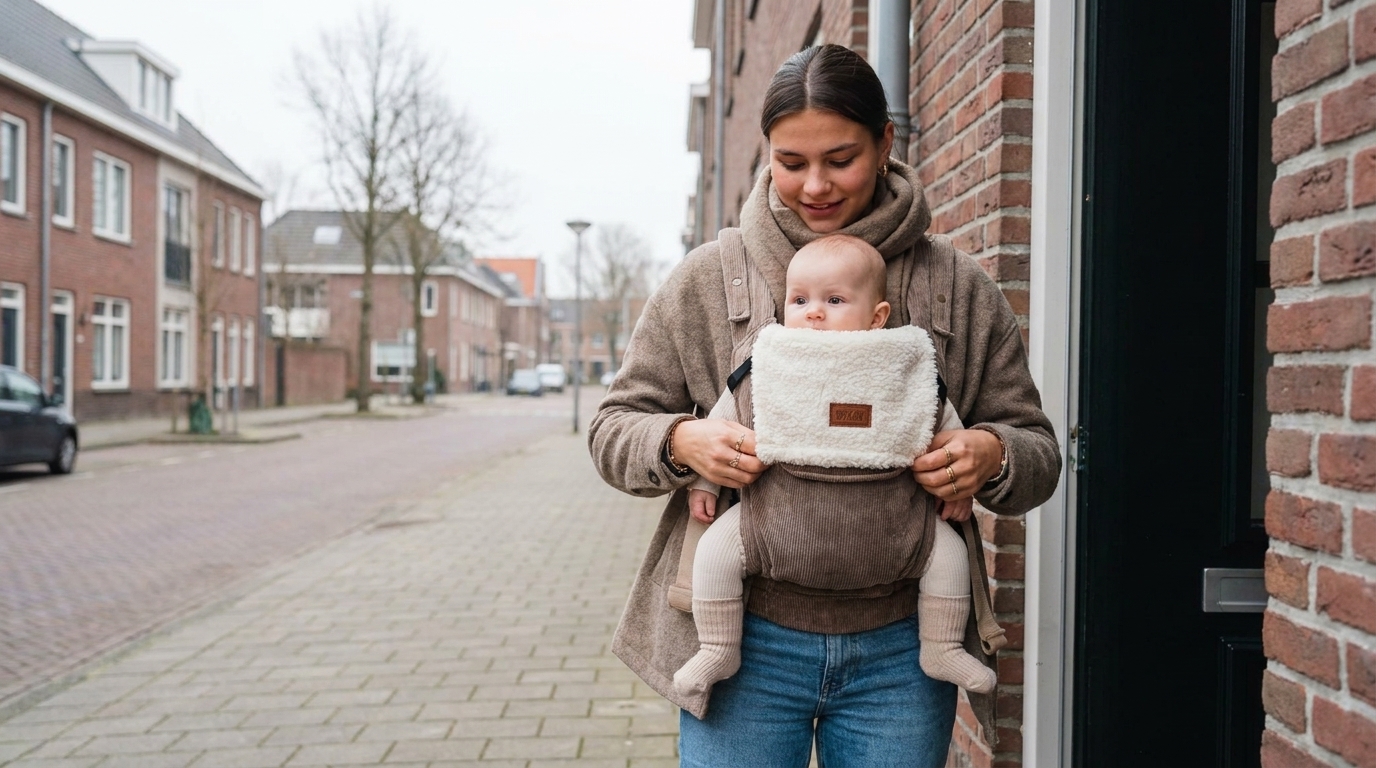
A quick winter errand can become a long departure when a snowsuit, carrier straps, mittens, and a sleepy little one all need to cooperate at once. The simpler approach is to keep your baby in comfortable indoor layers, use the carrier as part of their warmth, and add insulation over the carrier rather than underneath it.
This guide explains how to keep baby warm in a carrier for everyday walks, daycare drop-offs, and short errands while keeping fit and airway checks easy.
Why bulky snowsuits can make carrier fit harder
Thick outerwear can feel like the obvious answer on a cold morning. But once a baby is seated in a carrier, padded fabric can compress beneath the carrier’s straps. That can make it harder to achieve and check a close, supportive fit.
The American Academy of Pediatrics’ winter car-seat guidance explains that bulky coats and snowsuits compress under harness straps, which can leave the harness too loose. A baby carrier is not a car seat, but the same practical concern applies: avoid relying on thick, compressible layers beneath straps when you need to assess a snug fit.
There is also the indoor transition to consider. A heavily dressed baby may quickly feel too warm when you move from a chilly pavement into a heated shop, cafe, or daycare. An outer layer that can be removed separately gives you more flexibility without needing to take off a sleeping baby’s whole outfit.
Use an indoor-to-outdoor layering routine
For babywearing in winter without a snowsuit, start with the clothes your child would comfortably wear indoors. Think breathable layers such as a long-sleeve bodysuit, leggings or trousers, and warm socks or booties.
Then treat the carrier and its outer insulation as additional layers. This keeps bulky padding away from the area where you need to adjust and inspect the carrier.
- Dress your baby in comfortable, breathable indoor clothes.
- Put on and adjust the carrier as you normally would.
- Add warmth over or within the carrier with an insulating inlay.
- Remove the inlay when you arrive indoors if your child seems warm.
This approach can make how to dress baby in carrier winter feel much less complicated. Instead of rebuilding every layer at each stop, you can adjust the outer warmth first.
Attach the Inlay Teddy Ecru in a few simple steps
The Inlay Teddy Ecru is designed to add a soft insulating teddy layer to a standard or summer carrier, without requiring a separate winter carrier. Its 80% cotton and 20% polyester construction is intended for children from birth through 4 years old, up to 23 kg.
For a buckle carrier with shoulder straps that can be unclipped, thread each shoulder strap through the inlay’s integrated elastic bands before fastening the carrier. The elastic bands help hold the inlay in position while you carry your child.
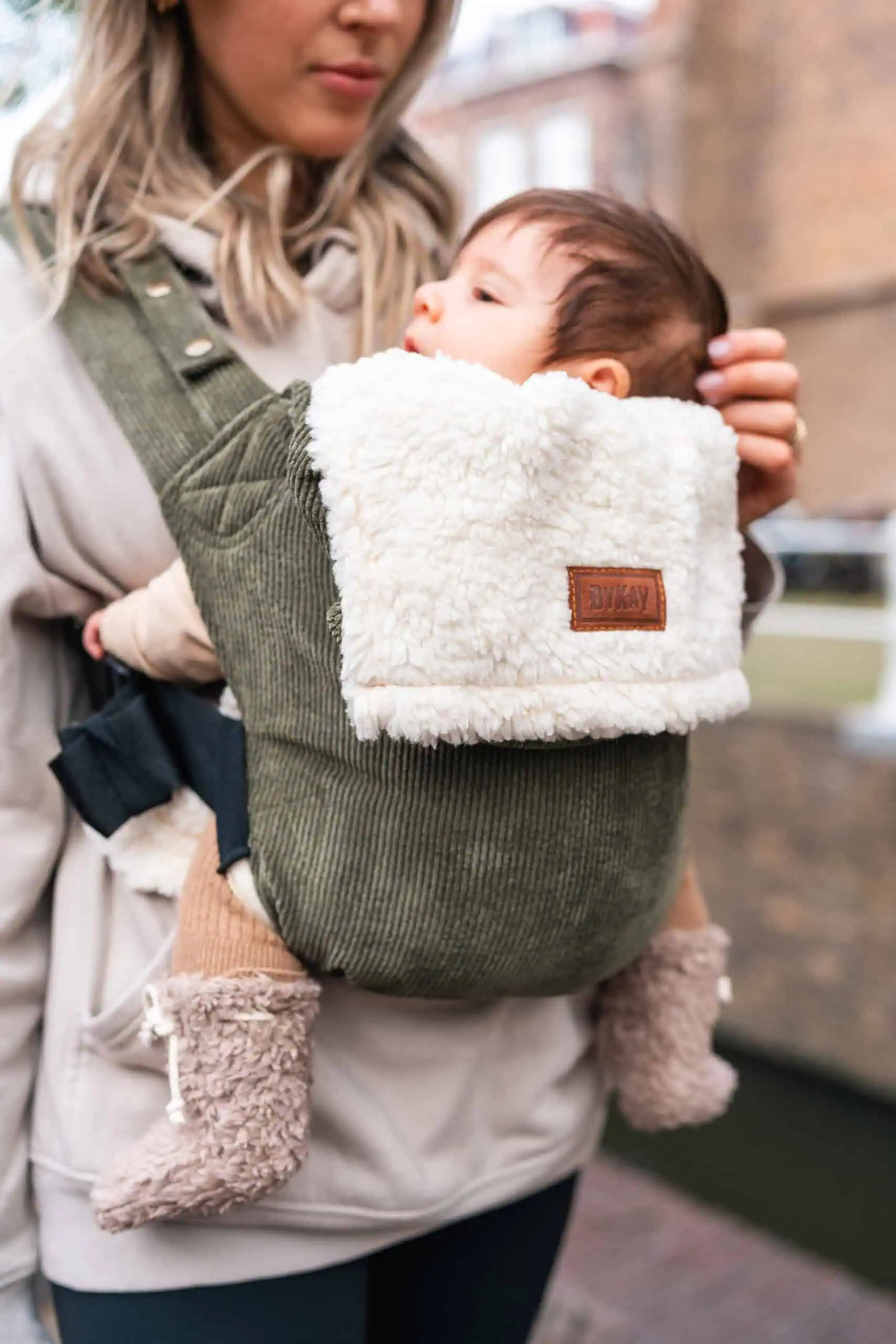
For a carrier with straps that cannot be unclipped, the inlay can rest loosely inside the carrier. With a wrap or ring sling, tuck it between the fabric layers rather than trying to clip it on. The inlay is compatible with front, hip, and back carrying positions, so you can use the setup that is appropriate for your child and carrier.
Before stepping outside, make a final carrier check: your child should be positioned securely, the carrier should be adjusted as intended, and the inlay should add warmth without covering their face.
Keep the safety checks simple and visible
Winter layers should never get in the way of seeing your baby’s face. Keep their nose and mouth completely clear, and make sure fabric is not creeping upward around the face.
It also helps to check the back of your child’s neck regularly. This gives you a practical sense of whether they are becoming too warm, especially when moving between outdoor cold and indoor heating. Add or remove the inlay as needed rather than assuming one setup will suit every stop on your route.
If you use a ring sling, review the positioning basics in our guide to using a ring sling safely for newborns. Clear airways, appropriate support, and careful fabric adjustment matter in every season.
Make winter transitions easier
Winter babywearing tips do not need to turn into a complicated checklist. Start with normal indoor clothing, adjust the carrier carefully, and add a removable insulating layer for the walk outside. When you arrive somewhere warm, you can reassess the outer layer without undoing the whole carry.
That means less time wrestling with thick outerwear and more time getting where you need to go, whether that is a grocery run, a daycare drop-off, or a quiet walk around the neighborhood.
Ready for a calmer winter exit?
Skip the bulky-snowsuit routine and explore the Inlay Teddy Ecru for a flexible way to add warmth to your existing carrier or sling. Keep the fit visible, keep airways clear, and make the outer layer the part of your routine that is easiest to adjust.

